Mr. Meyer
Mr. Meyer is a corpulent, hook-nosed underwriter at Lloyds, the immense association of insurers and shipping-men headquartered in the London Royal Exchange. He is introduced as the noisiest figure in the panic that follows the announcement of the Titan's destruction, a man whose flashing black eyes and heavy groan reveal the depth of his personal stake. As the heaviest insurer of the Titan, he faces ruin when the ship is lost, and his desperate, often comical, attempts to escape payment drive much of the novella's final act. Meyer is a creature of the insurance world, a world where risk is calculated, policies are parsed, and human tragedy is reduced to clauses and claims. His character embodies the economic logic that governs the Titan's fate, from the company's decision to steam at full speed in fog to the legal battles over liability. He is both a victim of the system he serves and a shrewd manipulator within it, and his story reveals the moral ambiguities at the heart of maritime commerce.
The Underwriter's Predicament
Mr. Meyer's first appearance comes in the chaotic aftermath of the Titan's sinking, when the Crier's announcement throws the assembled underwriters and brokers into an uproarious panic. He breaks away from the crowd and makes his way to the Captain's room, where, after a draught of brandy, he seats himself heavily with a groan that comes from his soul. "Father Abraham," he mutters, "this will ruin me." His loss is ten thousand pounds, a sum that prompts an unkind colleague to remark, "Serve you right... have more baskets for your eggs." Meyer's response is to drink himself stupid, neglecting his business and bemoaning his luck in the Captain's room for days. His despair is compounded when he reads a bulletin about a life-buoy from the Royal Age, a ship he also insured, and he howls, "Oh, mine good God," rushing toward the Captain's room. An observer notes that he "covered the whole of the Royal Age, and the biggest chunk of the Titan," and that "It'll take his wife's diamonds to settle." Meyer's ruin seems inevitable, and his behavior reflects the panic of a man who has staked everything on a single, catastrophic risk.
The Scheme to Avoid Payment
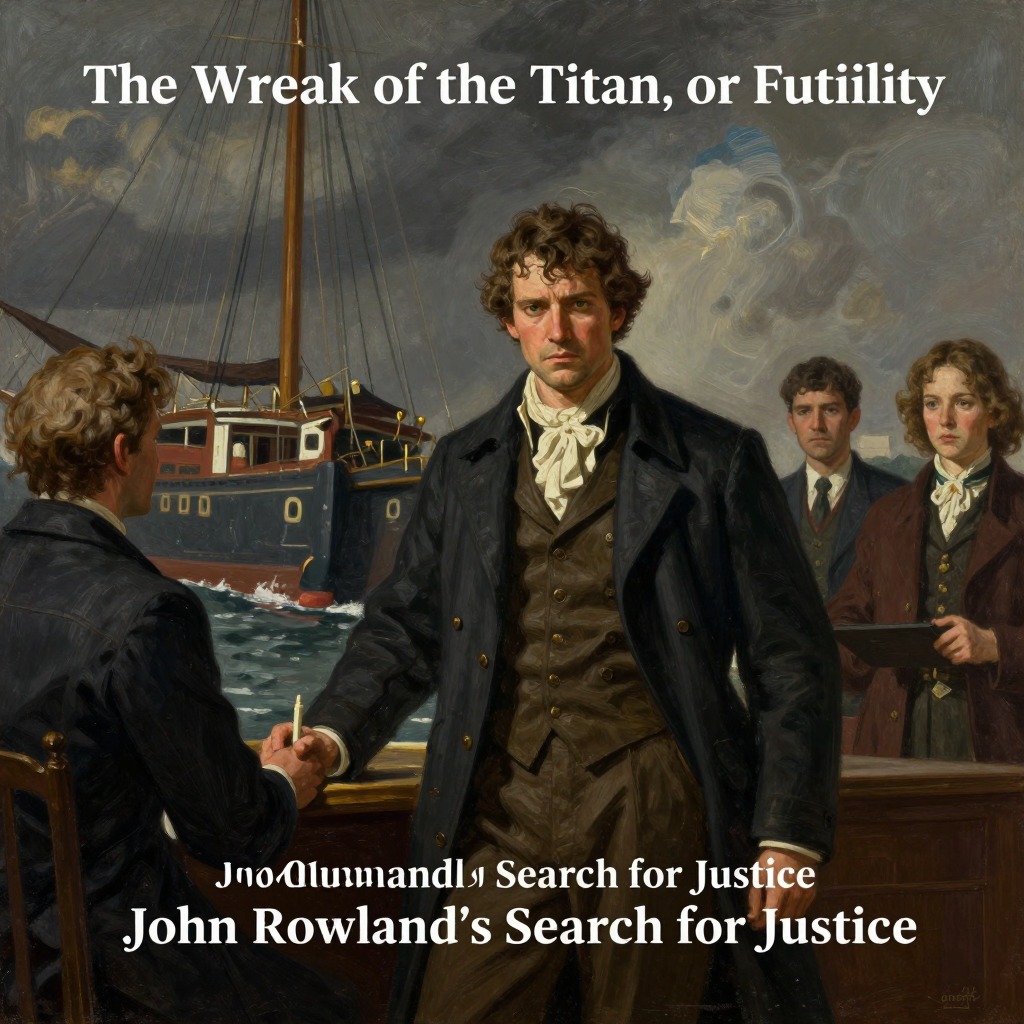
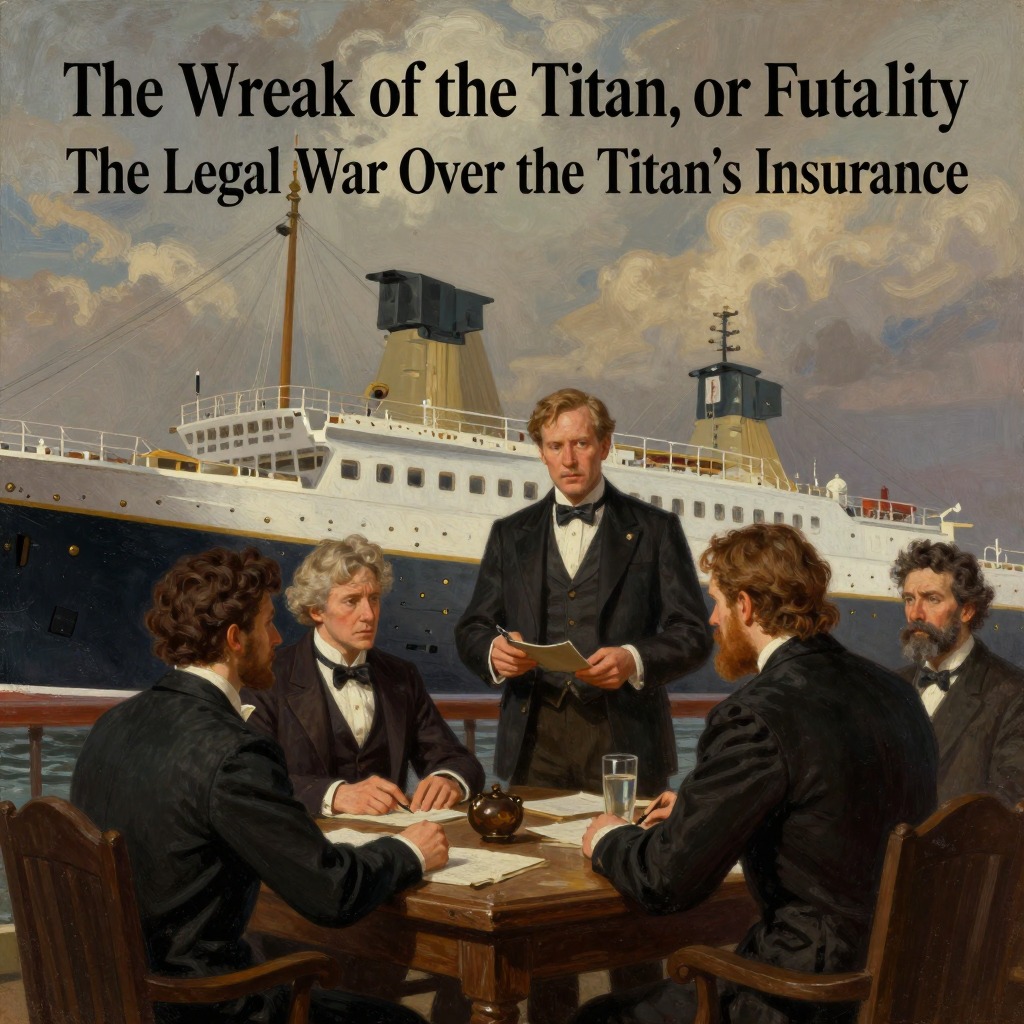
Meyer's fortunes turn when he learns of John Rowland, a sailor rescued from the iceberg with a child, who speaks of a ship cut in half the night before the Titan's loss. The underwriters, including Meyer, realize that this collision with the Royal Age, concealed by Captain Bryce in his sworn statement, could void the Titan's insurance policy. Meyer, now clear-eyed and clear-headed after a Turkish bath, becomes a busy, scheming man of business. He orchestrates a confrontation at his Threadneedle Street office, where he confronts Captain Bryce and Mr. Austen with the accusation that they concealed the collision. He thunders, "I mean that you have concealed in your sworn statement all reference to der fact that you collided with and sunk the ship Royal Age on der night before der wreck of your own ship." When the captain blusters, Meyer's oily smile indicates he has said too much. Meyer's scheme is to prove that Rowland was drunk on lookout, thereby annulling the insurance as an act of barratry by part-owners. He eagerly asks Rowland, "You were drunk on der lookout --- you were raving drunk, as he said himself. You will swear to this, will you not, my friend?" But Rowland turns the tables, pointing out that it was Bryce and Austen who drugged him, and that their act, as part-owners, nullifies the policy. Meyer's joy is short-lived, as his scheme collapses.
The Reversal and Its Aftermath
When Rowland refuses to testify, Meyer's triumph turns to despair. He locks the door and pleads, "Oh, mine goot Gott... vwbat I do to you, hey? Vwhy you go pack on me, hey? Haf I not bay der doctor's bill? Haf I not bay for der carriage? Haf I not treat you like one shentleman?" Rowland's refusal means the insurance must be paid, and Meyer's ruin is averted only by the financial collapse of Mr. Selfridge, the heaviest stockholder, who dies of heart failure upon learning he is ruined. Meyer's reaction is a mixture of annoyance, jubilation, and simulated shock, as he pats Myra on the head and remarks sorrowfully that the child will not inherit the hundred thousand pounds. He then tries to salvage his position by seeking other witnesses, but finds that the surviving crew members have disappeared or signed for Cape voyages. He gives the story to the press, hoping for corroboration, but it only leads to Rowland's arrest in New York. Meyer's final appearance is in the office, where he laments his fate, but his character remains a study in the moral compromises of the insurance trade, where the pursuit of profit blinds him to the human cost of the Titan's disaster.